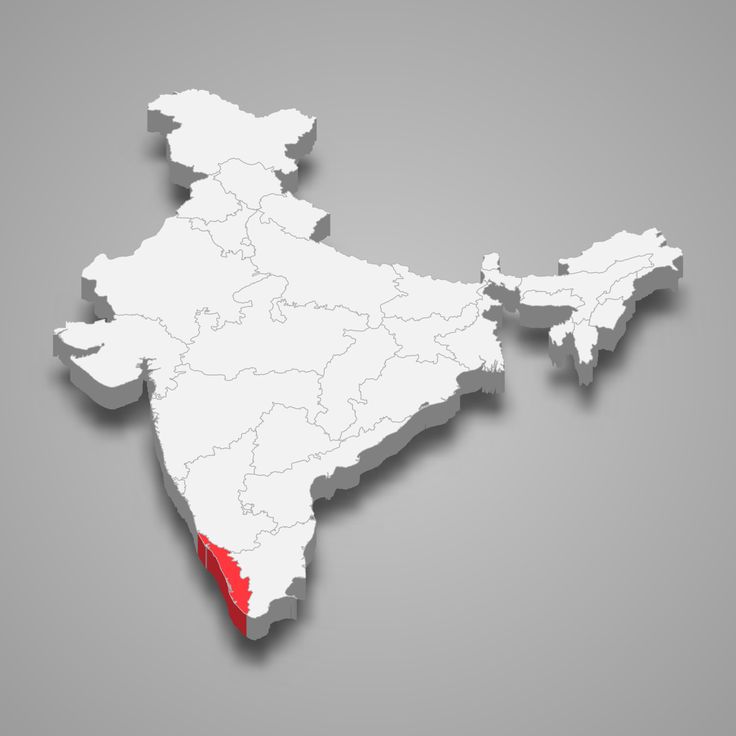
"God's Own Country"
Key details about Kerala's upcoming legislative assembly elections
Understanding the state's exceptional social and political landscape
Kerala, on the southwestern tip of India, is celebrated the world over as "God's Own Country" — a state of lush backwaters, pristine beaches, ancient spice trade routes, and a social development record that rivals developed nations. With a literacy rate of over 96%, some of India's best health indicators, and a deeply engaged citizenry, Kerala presents a uniquely competitive and politically vibrant democracy.
Kerala became the first state in the world to democratically elect a communist government in 1957, under E.M.S. Namboodiripad. Since then, the state has been defined by a remarkable electoral alternation between two broad coalitions: the Left Democratic Front (LDF), anchored by the Communist Party of India (Marxist), and the United Democratic Front (UDF), led by the Indian National Congress.
This two-front dynamic has produced one of India's most disciplined swing democracies — rarely has any coalition won back-to-back terms. The 2021 election was a historic exception, returning Pinarayi Vijayan's LDF government with a commanding 99 seats, a record-breaking result that broke Kerala's famous anti-incumbency tradition.
Internationally acclaimed for its decentralised governance, strong public health system, high female workforce participation, and robust social safety net, the "Kerala Model" of development continues to set the agenda for electoral debate — with both fronts competing to claim ownership of its successes and chart its future.
Kerala's economy rests on remittances from its large Non-Resident Keralite (NRK) community in the Gulf and beyond, a booming tourism sector, cashew and spice cultivation, fisheries, and a rapidly growing IT and services sector centred around Thiruvananthapuram's Technopark. The state also has one of India's most active cooperative economies.
With 140 assembly constituencies and 20 Lok Sabha seats, Kerala carries significant weight in both state and national politics. Its high literacy and political consciousness translate into exceptionally high voter turnout figures and a media-savvy electorate that closely scrutinises incumbents. Community affiliations — Hindu, Muslim, and Christian — as well as caste equations among Ezhavas, Nairs, and Dalits play a nuanced role in constituency-level contests.
The 2026 Kerala Assembly election will be historic: can the LDF defy convention again and secure a third consecutive term, or will the UDF reclaim power on the back of local governance issues, youth unemployment, and the lingering ripples from various controversies? The BJP, eyeing a breakthrough in a state where it has remained largely marginal, will also contest vigorously. All eyes are on Thrissur, Palakkad, and Thiruvananthapuram districts as bellwether battlegrounds.
Current distribution of seats in the Kerala Legislative Assembly
Full list of 140 constituencies – current delimitation (2026 elections)
| No. | Constituency | District | Lok Sabha Constituency |
|---|
Critical factors that will shape the upcoming elections
Educated youth unemployment remains a persistent concern. Expanding IT parks, startup ecosystems, and manufacturing corridors to retain talent within the state will be a central campaign promise.
Kerala's world-class public health network — including the Ardram Mission and Karunya Health Scheme — will be fiercely debated, with both fronts pledging to expand universal healthcare coverage.
After devastating floods in 2018 and 2019, landslides in Wayanad, and recurring coastal erosion, environmental governance and disaster preparedness have become front-and-centre electoral themes.
Fluctuations in Gulf remittances and post-pandemic economic recovery affect millions of families. Parties will compete on economic policy, investor attraction, and diaspora welfare.
Beyond literacy, the debate has shifted to education quality, NEET performance, digital learning infrastructure, and higher-education reforms for professional colleges.
Fiscal federalism, GST compensation, delayed central funds, and resistance to perceived central interference in local governance will energise the state autonomy narrative.